

Seminars
Seminars are held Wednesdays, at 3:30 pm, in person, at Zumberg Hall of Science, Room 252 (ZHS 252) and/or as Zoom webinars. See the individual seminar announcements for details.
Spring, 2026
Printability and Deformation Mechanics of Additively Manufactured Metals
Yinmin (Morris) Wang
Professor
Department of Materials Science and Engineering
University of California, Los Angeles
Los Angeles, CA
Additive manufacturing (AM) has attracted increasing attention due to its ability to produce complex geometric components with superior materials properties in a single print. One big challenge is, however, that many structural materials are difficult to print due to the extreme processing conditions associated with AM. Laser powder-bed-fusion (L-PBF), for example, involves processes that have ultrafast cooling rates and large temperature gradients, which trigger microcracks in many high-strength materials. This talk will present my group recent efforts to investigate the printability of pure tungsten – one of the most challenging materials for AM due to its high melting point (3422°C) and high ductile-to-brittle transition temperature (DBTT). We will discuss, step-by-step, how the printability issue can be systemically tackled. The second part of my talk will focus on another “tough-to-print” material: the high-strength, lightweight Al7075 alloy, widely used in aerospace and automotive industries. We demonstrate that extraordinary mechanical properties – including record specific ultimate tensile strength and high ductility – can be achieved via a nanoparticle inoculation strategy. In situ synchrotron X-ray diffraction was applied to reveal the unique deformation mechanics of these alloys, specifically the complex interactions introduce additional strengthening mechanisms to the material system. Based on these observations, we will briefly discuss alloy design strategies for high performance structural materials in future applications.
 Yinmin (Morris) Wang is a professor of Materials Science and Engineering at the University of California, Los Angeles (UCLA). He joined UCLA as a full professor in 2020 after spending 17 years at Lawrence Livermore National Laboratory (LLNL). At LLNL, he was the inaugural recipient of the Harold Graboske Fellowship, after obtaining his Ph.D. from Johns Hopkins University. His research group focuses on the structure-property relationships of additively manufactured metals, the mechanics of nanostructured materials, and lithium-ion batteries. Prof. Wang was elected as a Fellow of the American Physical Society and has received several prestigious honors, including Nano50 Innovator Award and multiple Director’s Science & Technology Awards at LLNL. He also served as an Editorial Board Member of Scientific Reports from 2017 to 2020.
Wednesday, January 14, 2026
3:30 PM
Zumberg Hall of Science, Room 252 (ZHS 252)
host: Chen
Improving Engineering Resilience and Sustainability through Engineered Living Materials
Qiming Wang
Associate Professor
Sonny Astani Department of Civil and Environmental Engineering
University of Southern California
Los Angeles, CA
Modern society demands engineering materials with high resilience and sustainability, yet most conventional materials degrade under environmental hazards or pose long-term environmental risks. Urban infrastructure materials age and fail, while widely used plastics suffer from extremely low biodegradability. In contrast, biological living materials exhibit extraordinary resilience and sustainability through living cells that enable self-growing, self-remodeling, self-healing, and self-strengthening. In this talk, we present a strategy that integrates living components—such as microorganisms, plants, and chloroplasts—into traditional engineering materials to create engineered living materials. These materials behave more like biological systems, responding dynamically to environmental conditions. For example, bacteria-assisted 3D-printed polymers can self-grow into highly tough, shell-like structural composites, while chloroplast-assisted polymers can harness carbon dioxide for photosynthetic self-strengthening. This approach opens new pathways for sustainable, adaptive, and high-performance materials.
 Qiming Wang is an Associate Professor and Stephen Schrank Early Career Chair in the Sonny Astani Department of Civil and Environmental Engineering at the University of Southern California (USC). He was previously a postdoctoral associate in Mechanical Engineering at the Massachusetts Institute of Technology and earned his Ph.D. in Mechanical Engineering from Duke University in 2014. He has received numerous honors, including the NSF CAREER Award, ONR and AFOSR Young Investigator Awards, the Engineering Mechanics Institute Leonardo Da Vinci Award, and the Society of Manufacturing Engineers Outstanding Young Manufacturing Engineer Award. His research focuses on the manufacturing and mechanics of advanced materials and structures to address challenges in infrastructure, energy, environment, robotics, and healthcare. A major thrust of his work is the development of engineered living materials by integrating living components—such as microorganisms, plants, and living chemistry—into engineering materials using modern manufacturing technologies. His research has been widely featured in major media outlets, including Science, Nature, The Washington Post, NBC News, and The Wall Street Journal.
Wednesday, January 21, 2026
3:30 PM
Zumberg Hall of Science, Room 252 (ZHS 252)
host: Maghsoodi
The Separation Aerodynamics of Idealized Fragmenting Meteoroids
Stuart Laurence
Professor
Department of Aerospace Engineering
University of Maryland
College Park, MD
For a meteoroid undergoing break-up within the atmosphere, the high-speed aerodynamic interactions between fragments immediately following disruption play a critical role in determining the risks posed at the terrestrial surface. In this seminar, I will first describe experimental, computational, and theoretical studies of the interactions between two isolated bodies as a basis for understanding the more general separation problem, highlighting the importance of “shock surfing”, where one body rides the shock of the other body downstream. I will then describe recent experiments in a hypersonic wind tunnel to determine the separation characteristics of an idealized fragmented meteoroid, consisting of an initially spherical cluster of up to 115 close-packed spherical bodies. For equal-sized fragments, the mean separation velocity follows a power law as a function of population with an exponent of ~0.4, while individual velocities are well-modeled by a single-parameter Rayleigh distribution. In unequal clusters, mass retention in sub-clusters decreases the mean separation velocity, but individual velocities again follow approximate Rayleigh distributions (with the governing parameter now radius-dependent). An examination of the most ejected bodies in the dataset also reveals that shock surfing can produce significant outliers and potentially explain a substantial portion of the discrepancy between airburst observations and previous predictions.
 Stuart Laurence is a Professor of Aerospace Engineering at the University of Maryland, College Park. He completed his undergraduate education at the University of Auckland, New Zealand, in 2001 and then received his M.S. and Ph.D. in Aeronautics from the California Institute of Technology in 2002 and 2006. After working as a scientific researcher at the German Aerospace Center (DLR) in Göttingen, he moved to the University of Maryland in 2013. His research interests encompass various aspects of high-speed flows, including boundary-layer transition and turbulence, shock-wave/boundary-layer interactions, multi-body interactions, fluid-structure interactions, and multi-phase flows. He is a recipient of the NSF CAREER Award and the DARPA Young Faculty Award, an Associate Fellow of the AIAA, and an Associate Editor of Experiments in Fluids.
Wednesday, January 28, 2026
3:30 PM
Zumberg Hall of Science, Room 252 (ZHS 252)
host: Pantano
The Role of Left Ventricular–Arterial Interactions on Coronary Fluid Dynamics
Soha Niroumandi
Ph.D. Candidate
Aerospace & Mechanical Engineering Department
University of Southern California
Los Angeles, CA
Coronary blood flow is governed by a complex interplay between heart contraction, arterial pulsatility, and wave dynamics, making it highly sensitive to ventricular–arterial hemodynamic coupling. Consequently, coronary perfusion is strongly influenced by pressure and flow wave reflections within both the aorta and the coronary arterial network.
In this talk, I will examine the role of left ventricular–arterial interactions in shaping coronary hemodynamics, providing mechanistic insights from a one-dimensional model of the entire circulatory system. The model integrates reduced-order one-dimensional Navier–Stokes hemodynamics formulations (coupled to hyperelastic tube laws) that govern the corresponding fluid–structure dynamics in each vascular segment coupled with ODE-based representations of the heart and microvasculature, solved using the pseudo-spectral Fourier continuation approach.
Soha Niroumandi is a Ph.D. candidate in the Department of Aerospace and Mechanical Engineering at the University of Southern California (USC). She is advised by Professor Niema Pahlevan. Soha received her MSc in aerospace and mechanical engineering from the University of Tehran. Her research focuses on the intersection of mechanics, AI, and cardiovascular health, with an emphasis on non-invasive methods for early disease risk detection. Her research has been recognized with an American Heart Association Predoctoral Fellowship and selection as a 2025 MIT Rising Star in Mechanical Engineering.
Wednesday, February 4, 2026
3:30 PM
Zumberge Hall of Science, Room 252 (ZHS 252)
Laboratory Experiments on Internal Solitary Waves
Jen-Ping Chu
Ph.D. Candidate
Aerospace & Mechanical Engineering Department
University of Southern California
Los Angeles, CA
Internal solitary waves (ISWs) are ubiquitous in stratified water and play a crucial role in the transport of energy and nutrients in the ocean. This seminar introduces a novel jet-array wavemaker (JAW) that generates ISWs through a prescribed mass flux, offering a flexible alternative to traditional gate-release experimental methods. Using synchronized planar laser-induced fluorescence (PLIF) and particle image velocimetry (PIV), we demonstrate that the JAW system produces small-to-intermediate amplitude waves that closely match theoretical predictions. Larger waves approaching theoretical limits reveal interfacial mixing and Kelvin-Helmholtz instabilities. Additional experiments and complementary RANS simulations characterize the impact of floating structures or vegetation canopies (e.g., kelp farms) on ISW dynamics. Our findings indicate that high-porosity canopies result in minor amplitude reduction. Dense canopies trigger significant wave transformation. In dense canopy cases, the shear layer developing at the bottom edge of the canopy reaches strengths comparable to the inherent shear of an ISW at the pycnocline, generating vortex pairs that accelerate upper-layer fluid. This interaction leads to complex nonlinear amplitude modulation and significant energy redistribution.
Jen-Ping Chu is a Ph.D. candidate in the Department of Aerospace and Mechanical Engineering at the University of Southern California (USC). He is co-advised by Professor Mitul Luhar in Aerospace and Mechanical Engineering and Professor Patrick Lynett in the Department of Civil and Environmental Engineering. Jen-Ping earned his Bachelor’s degree in Mechanical Engineering from National Taiwan University and received his Master’s in Aerospace Engineering from USC during his doctoral studies.
His research utilizes a combination of flow visualization and RANS modeling to study wave-structure interactions. His early doctoral work focused on internal solitary waves in stratified conditions, he is currently examining free-surface solitary wave impacts on waterfront structures as part of a Naval project.
Wednesday, February 4, 2026
3:30 PM
Zumberge Hall of Science, Room 252 (ZHS 252)
host: Ronney
Control System Design and Dynamic Modeling of Aerospace and Mechanical System
Henryk Flashner
Professor Emeritus
Department of Aerospace & Mechanical Engineering
University of Southern California
Los Angeles, CA
The objective of this talk is to demonstrate that dynamic modeling and control law design are integral parts of the control system development process for aerospace and mechanical systems. Consequently, control systems theory and analytic dynamics and vibrations methods need to be integrated to create a coherent design procedure that can achieve the required performance specifications for this class of systems.
In the first part of the talk, the control system design problem will be presented. The competing requirements of disturbance rejections, noise attenuation and robust closed-loop stability will be formulated. It will be demonstrated that by employing analytical mechanics methods, such as a Hamiltonian formulation of system dynamics, one can employ the inherent characteristics of aerospace and mechanical systems that facilitate the resolution of the control design trade-offs.
In the second part of the talk, implementation of the integrated control design and modeling approach in various space missions will be presented. These include modeling and control of the Power Extension Package (PEP), momentum unloading for the 25KW system, development of Entry Descent and Landing (EDL) for the Pathfinder Mission, and midcourse maneuver of Mars 98 spacecraft.
 Henryk Flashner received his BSc and MSc degrees in mechanical engineering from Technion-Israel Institute of Technology and a PhD in mechanical engineering from University of California, Berkeley. After graduation he worked in TRW Space Technology Group in Redondo Beach where he was Staff Member and the Principal Investigator of the Large Space Structure Technology Internal Research and Development (IRAD). In 1983 he joined the Department of Mechanical Engineering at USC and retired in May 2025. Dr. Flashner participated in the analysis and design for various space missions at JPL such as Pathfinder Mars lander, Mars 98 and Soil Moisture Active Passive (SMAP).
Wednesday, February 11, 2026
3:30 PM
Zumberg Hall of Science, Room 252 (ZHS 252)
host: Ronney
Probing Fast High Temperature Transformations in Nanoparticles for Energetic Materials and Propulsion
Michael Zachariah
Distinguished Professor
Department of Chemical and Environmental Engineering
University of California, Riverside
Riverside, CA
The high temperature reactivity of metal/metal oxides are important in a wide variety of industrial applications including propulsion, solar-thermal hydrogen generation, CO2 sequestering, chemical-looping combustion, and energetic materials, among others. In this seminar I will discuss probing the reactivity of nanometals and metal oxides, towards developing a conceptual picture of rate limiting and phenomenological processes, in particular for application to energetic materials. This discussion will naturally lead to what makes nanoscale materials attractive for these applications, as well as some of their limitations.
 Michael Zachariah is a Distinguished Professor in Chemical Engineering and Materials Science at the University of California, Riverside. He has expertise in the in-situ characterization of materials under extreme conditions and during combustion, as well as aerosol generated materials and their metrology. He is a recipient of the University of Maryland Outstanding Researcher Award, and the Sinclair Award for Sustained Excellence in Aerosol Research awarded by the American Association for Aerosol Research.
Wednesday, February 18, 2026
3:30 PM
Zumberg Hall of Science, Room 252 (ZHS 252)
host: Egolfopoulos
Bio-like Soft Materials with Life-like Intelligence
Ximin He
Associate Professor
Materials Science and Engineering Department
University of California, Los Angeles
Los Angeles, CA
From the cellular level up to the body system level, living organisms present elegant designs to realize the desirable structures, properties and functions. For example, tendons and muscles are tough but soft, owing to highly complex hierarchical structures rarely found in synthetic materials. Our neuromuscular system enables our motion sensing and response with built-in feedback control, presenting superior intelligence also lacking in manmade systems. Gels, as a class of liquid-laden crosslinked polymer networks, not only have tissue-like water-rich porous networks and can also change their volume and physical properties in response to environmental cues. At UCLA He lab, we exploit fundamental material processing-structure-property-function studies of hydrogels and their derivatives, to create (i) ‘bio-like’ structures and properties and (ii) ‘life-like’ intelligence in functional soft materials for applications in robotics, biomedicine, energy and environment. This talk will present how these could be realized by mastering polymer-water interactions. Specifically, using classic chemical physical principles to modulate macromolecule assembly up to complex polymer networks, the fundamental limits in mechanical, diffusion and electrical properties could be broken can be broken to design extreme properties. The enabled soft materials featuring high mechanical toughness, ion/electron conduction, fast stimuli response, and ‘synthetic intelligence’ make possible the next-generation energy-self-sufficient robots, personalized medical implants, as well as futuristic smart wearable electronics and battery-powered flight.
 Ximin He is an associate professor of Materials Science and Engineering at University of California, Los Angeles (UCLA) and Faculty of California Nanosystems Institute (CNSI). Dr. He was postdoctoral research fellow in the School of Engineering and Applied Science and the Wyss Institute of Bioinspired Engineering at Harvard University. Dr. He received her PhD in Chemistry at Melville Laboratory for Polymer Synthesis from University of Cambridge. Dr. He’s research focuses on bioinspired soft materials, structural polymers and their physical, mechanical, electrical and photothermal properties with broad applications in biomedicine, energy, environment and robotics. Dr. He is the recipient of the NSF CAREER award, AFOSR Young Investigator award, CIFAR Global Scholar, SES Young Investigator Medal, Moore Inventor Fellow, Johnson & Johnson WiSTEM2D award, International Society of Bionic Engineering (ISBE) Outstanding Youth Award, Advanced Materials Rising Star Award, 3M Non-tenured Faculty Award, Hellman Fellows Award, and UCLA Faculty Career Development Award. Her research on bioinspired tough hydrogels, phototropic, phototaxic, homeostatic and anti-icing materials have garnered a number of regional and international awards and was featured in >100 international news outlets.
Wednesday, February 25, 2026
3:30 PM
Zumberg Hall of Science, Room 252 (ZHS 252)
host: Zhao/Maghsoodi
Contributions of Numerical Simulations to Turbulence Research
Julian Andrzej Domaradzki
Professor Emeritus
Aerospace & Mechanical Engineering Department
USC
Los Angelees, CA
Turbulence is a chaotic and disorganized motion of gases and liquids with a profound influence on atmospheric and oceanic phenomena and performance of engineering devices. A seemingly paradoxical observation is that the equations describing turbulent flows are well known (nonlinear Navier-Stokes equations of classical fluid mechanics) and yet in most practical situations their solutions are not feasible, making turbulence one of the last remaining grand challenges of classical physics. Over the last 150 years there has been a plethora of attempts to develop mathematically tractable and accurate descriptions of turbulence yet a general approach to predict turbulence remains elusive. I will briefly describe the role and evolution of numerical simulations in turbulence research from its inception in 1950 when ENIAC was used by Charney, Fjørtoft, and von Neumann to produce a 24-hour weather forecast. Subsequently I will focus on theoretical controversies regarding high Reynolds number turbulence that persisted from the time of the Kolmogoroff theory of inertial range (1941) and the role numerical simulations and associated analyzes of nonlinear interactions played to resolve them in 1990s. Finally, I will show how a similar analysis of nonlinear interactions can be used to develop an autonomous subgrid-scale model that reproduces the Kolmogoroff -5/3 spectral exponent and predicts the correct value of the Kolmogoroff constant CK in large eddy simulations at high Reynolds numbers.
 Julian Andrzej Domaradzki is a Professor Emeritus in the Department of Aerospace and Mechanical Engineering, the Viterbi School of Engineering at the University of Southern California in Los Angeles. He has been affiliated with USC as a faculty member in AME from 1987 until transitioning to the emeritus status in 2026. He is an author or co-author of over 200 scientific contributions with focus on turbulence theory, modeling, and numerical simulations. His professional background includes a Ph.D. in Physics from the University of Warsaw, Poland, and a number of visiting positions (Technical University in Munich; Université Libre in Brussels; Technical University in Dresden; ETH in Zürich; Tokyo Technical University; German Aerospace Establishment in Göttingen) as well as postdoctoral positions at Princeton University and MIT. He is Associate Fellow of the American Institute of Aeronautics and Astronautics (2011), Fellow of the American Physical Society (2008), recipient of Ouverture Internationale Award (2006), Invitation Research Fellowship of Japan Society for the Promotion of Science (2000), Alexander von Humboldt Research Award (1992) and Fellowship (1980), and the USC School of Engineering Northrop Research Faculty Award (1991).
Wednesday, March 4, 2026
3:30 PM
Zumberg Hall of Science, Room 252 (ZHS 252)
host: Domaradzki
Exploring the Path towards Non-Abelian Behavior in Topological Continuous Elastic Waveguides
Fabio Semperlotti
Professor
School of Mechanical Engineering
Purdue University
West Lafayette, IN
Inspired by recent discoveries of topological phases of matter in quantum physics, there has been a rapidly growing research effort to uncover analog mechanisms in classical wave physics, including acoustics and elastodynamics. By acting on key material symmetries, classical elastic materials can deliver dispersion and propagation properties reminiscent of selected topological quantum mechanical systems. Yet, of the ten topological classes, only a few have been successfully translated into their classical mechanical counterpart. In particular, the classes capable of non-abelian (i.e. order-dependent) behavior have attracted significant interest but their realization has proven quite elusive. In actual quantum systems, achieving non-abelian behavior can profoundly impact applications and it is currently regarded as one of the most promising ways to achieve robust qubits and noise-tolerant quantum computation. In elastic systems, non-abelian behavior can lead to the design of mechanical analog quantum gates, therefore opening exciting opportunities to pursue on-material analog computations and signal processing.
This talk will examine the requirements and potential strategies to realize non-abelian behavior in continuous elastic waveguides. As the topological behavior of materials strongly depends on the ability to control the accumulation of geometric phase, the discussion will begin with strategies to manipulate the geometric phase in continuous elastic waveguides by means of geometry manipulation. Then, two possible pathways to pursue non-abelian behavior in physically realizable continuous structures will be presented. The first explores the necessary building blocks to achieve class-D systems by embedding quasi-1D concepts, like the discrete Su-Schrieffer-Heeger (SSH) ladder, into 2D elastic waveguides. The second leverages an equivalent Thouless pumping method to produce continuous waveguides capable of non-abelian mode braiding. The performance of both strategies will be illustrated via a combination of theoretical, numerical, or experimental results.
 Fabio Semperlotti is a Professor in the School of Mechanical Engineering and the Perry Academic Excellence Scholar at Purdue University; he also holds a courtesy appointment in the School of Aeronautics and Astronautics Engineering. He directs the Structural Health Monitoring and Dynamics laboratory (SHMD) where he conducts, together with his group, research on several aspects of structures and materials design including structural dynamics and wave propagation, elastic metamaterials, structural health monitoring, and computational and experimental mechanics. His research has received financial support from a variety of sources including the National Science Foundation, the Department of Defense, the Department of Energy, and industrial sponsors. Dr. Semperlotti was the recipient of the National Science Foundation CAREER award (2015), the Air Force Office of Scientific Research Young Investigator Program (YIP) (2015), the DARPA Young Faculty Award (YFA) 2019, and the ASME C.D. Mote Jr. Early Career Award 2019.
Dr. Semperlotti received a M.S. in Aerospace Engineering, and a M.S. in Astronautic Engineering both from the University of Rome “La Sapienza” (Italy), and a Ph.D. in Aerospace engineering from the Pennsylvania State University (USA). In 2010, he was a postdoctoral research associate in the Mechanical Engineering department at the University of Michigan. Prior to joining Penn State, Dr. Semperlotti served as a structural engineer for a few European aerospace industries, including the French Space Agency (CNES), working on the structural design of space launch systems and satellite platforms.
Wednesday, March 11, 2026
3:30 PM
Zumberg Hall of Science, Room 252 (ZHS 252)
host: Maghsoodi
Drag Reduction with High-Performance Superhydrophobic Surfaces in High-Speed Flows
Chang-Jin “CJ” Kim
Distinguished Professor
Mechanical & Aerospace Engineering and Bioengineering Departments
University of California, Los Angeles
Los Angeles, CA
The potential friction-reducing ability of superhydrophobic (SHPo) surfaces, which may capture a thin air layer (called plastron) under water, have been studied by many over the last two decades. However, despite many reports of successful SHPo drag reduction in laboratory settings, a success in highly turbulent flows on the open water in natural environment was reported only recently with a motorboat (Xu et al., Phys. Rev. Appl., vol. 13, 2020, 034056) and in a towing tank (Xu et al., J. Fluid. Mech, vol. 908, 2021, A6). The success strongly suggested that most of the puzzling episodes of "lab success and field failure" in the past were caused simply by the inability to maintain the plastron in field conditions as well as the difficulty to accurately monitor the plastron during flow tests. To maintain a full plastron at typical boat speeds (tested up to ~14 knots; shear rate ~ 83000 s-1; friction Reynolds number ~5500), we have developed high-performance SHPo surfaces by advancing the micro electro mechanical systems (MEMS) technologies. To replace a part of hull surface with two 4 cm x 7 cm surface samples – one smooth and one SHPo, we have developed a unique low-profile shear comparator and installed it flush underneath a 4 m long motorboat. To avoid the widely-popular but often-misleading practice of confirming the existence of plastron with the silvery sheen appearance, we developed a new observation technique for field tests (Yu et al., Langmuir, vol. 37, 2021, pp. 1206-1214). The resulting drag-reduction data are found to collapse to one curve when plotted against the slip length in wall units. In addition to reporting ~30% of drag reduction with longitudinal micro-trench SHPo surfaces, the results attest the importance of microscopic nuances of SHPo surfaces even for the macroscale flows of water vessels.
 Professor CJ Kim is a Distinguished Professor and holds the Volgenau Endowed Chair in Engineering in the Mechanical and Aerospace Engineering Department of the University of California, Los Angeles (UCLA). He received B.S. from Seoul National University, M.S. from Iowa State University, and Ph.D. from the University of California, Berkeley, and had a postdoctoral visit to the University of Tokyo before joining UCLA in 1993. Directing the Micro and Nano Manufacturing Lab, Prof. Kim performs research in MEMS with a focus on utilizing surface tension. The recipient of Research Excellence Award (Iowa State Univ.), TRW Outstanding Young Teacher Award (UCLA), CAREER Award (NSF), Achievement Award (ALA), Samueli Outstanding Teacher Award (UCLA), Ho-Am Prize in Engineering (the Ho-Am Foundation), Robert Bosch Micro and Nano Electro Mechanical Systems Award (IEEE), he has been involved with numerous professional activities, including General Chair of the 2014 IEEE International Conference on MEMS. An ASME Fellow, IEEE Fellow, and AIMBE Fellow, he is currently serving on the Editorial Board of Micro and Nano Systems Letters, on the Editorial Advisory Board for the IEEJ Transactions on Electrical and Electronic Engineering, as Co-Editor-in-Chief of Functional Composites and Structures, and as Co-Editor-in-Chief for Droplet. Prof. CJ Kim has also been active in the commercial sector as a consultant, advisor, and startup founder.
Wednesday, March 25, 2026
3:30 PM
Zumberg Hall of Science, Room 252 (ZHS 252)
host: Zhao
host: Xu
host: Zhao
Soft Elastic Composites: Microstructure evolution, macroscopic multi-physics response, instabilities and associated soft modes
Pedro Ponte Castañeda
Professor
Department of Mechanical Engineering and Applied Mechanics
Graduate Group in Applied Mathematics and Computational Sciences
University of Pennsylvania
Philadelphia, PA
Soft elastic composite materials can undergo large deformations under normal operating conditions and, in many applications, such as in robotics and prosthetics applications, they are designed with the objective of undergoing controlled deformation by means of externally applied magnetic, electrical, pneumatic or other types of fields. They include porous, particle- and fiber-reinforced rubbers, thermoplastic and magnetorheological elastomers, dielectric elastomer composites, polymer foams, muscle and other biological tissues. As a consequence of the finite deformations involved, their microstructure evolves with the deformation and their constitutive or rheological behavior can be highly nonlinear and strongly anisotropic. This presents a challenge for the application of homogenization methods, which were originally developed to characterize the effective material parameters of composites, such as, for example, the thermal conductivity of a two-phase composite material, or the Young’s modulus of an isotropic metal polycrystal. In this presentation, I will give an overview of several methods that have been recently developed to characterize the multi-physics constitutive response of soft composites, as well as the evolution of the microstructure and the possible development of instabilities in such material systems. In addition, I will present some explicit examples, including those leading to a certain type of ‘twining’ instabilities and associated soft modes of deformation.
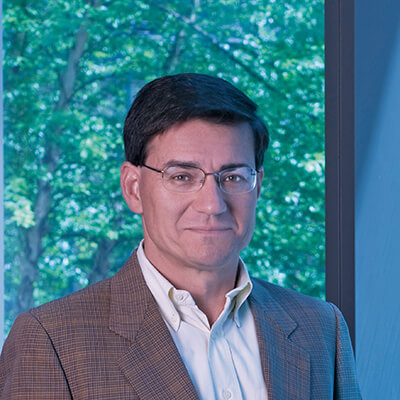 Pedro Ponte Castañeda is Raymond S. Markowitz Faculty Fellow and Professor in Mechanical Engineering & Applied Mechanics, Applied Mathematics & Computational Science, and Mathematics (secondary) at the University of Pennsylvania. He earned a B.S. in Mechanical Engineering and a B.A. in Mathematics from Lehigh University, and a Ph.D. in Applied Mathematics from Harvard University. He was Assistant Professor of Mechanical Engineering at the Johns Hopkins University (1987-90) and Professor of Mechanics at the École Polytechnique (2004-08). He has held visiting positions at the C.N.R.S. (France), Cambridge University, IMDEA Materials (Spain) and the University of Stuttgart. His honors include the Humboldt Senior Research Award (2013) and the ASME Warner T. Koiter Medal (2016).
Wednesday, November 5, 2025
3:30 PM
Seaver Science Library, Room 202 (SSL 202)
host: Plucinsky