

Seminars
Seminars are held Wednesdays, at 3:30 pm, in person, at Seaver Science Library, Room 202 (SSL 202) and/or as Zoom webinars unless unless a different time or location is listed in the seminar announcement.
Fall, 2026
—Laufer Lecture—
Bringing Materials Fabrication to 21st Century:
3D Nano- and Micro-Architected Materials as Key Enablers for Enhanced
Properties, Responsiveness, and Impact Mitigation
J.R. Greer
Ruben F. and
Donna Mettler Professor of Materials Science, Mechanics, and Medical Engineering
Applied Physics and Materials Science Department
California Institute of Technology
Pasadena, CA
https://jrgreer.caltech.edu
Creation of reconfigurable and multi-functional materials can be achieved by incorporating architecture into material design. In our research, we design and fabricate three-dimensional (3D) nano-architected materials that can exhibit superior and often tunable mechanical, thermal, photonic, electrochemical, and biochemical properties at extremely low mass densities, which renders them useful and enabling in technological applications. Dominant properties of such meta-materials are driven by their multi-scale hierarchy: from characteristic material microstructure (atoms) to individual constituents (nanometers) to structural components (microns) to overall architectures (millimeters and above).
Our research is focused on the fabrication, synthesis, and characterization of hierarchical materials using additive manufacturing (AM) techniques, as well as on investigating their mechanical, electrochemical, and chemo-mechanical properties as a function of architecture, constituent materials, and microstructural detail. AM represents a set of processes that fabricate complex 3D structures using a layer-by-layer approach, with some advanced methods attaining nanometer resolution and the creation of unique, multifunctional materials and shapes derived from a photoinitiation-based polymerization of custom-synthesized resins and thermal post-processing. A type of additive manufacturing, vat polymerization via hydrogel infusion (HIAM), has allowed for using hydrogels as precursors to produce 3D nano- and micro-architected metals and metal oxides, and exploiting their nano-induced material and structural properties. We describe additive manufacturing via vat polymerization and function-containing chemical synthesis to create 3D nano- and micro-architected metals, ceramics, multifunctional metal oxides, and metal-containing polymer complexes with dynamic bonds, as well as demonstrate their potential in energy storage, microrobotics, and nano- and micro-electronics. I will describe how the choice of architecture, chemical composition, and microstructure can elicit new microstructural orders and induce stimulusresponsive, reconfigurable, and multifunctional response.
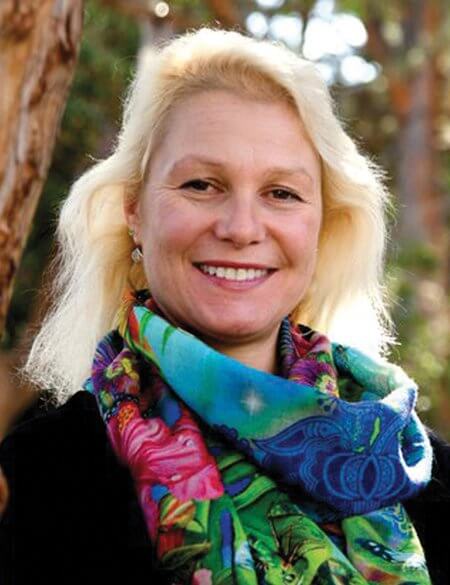 Greer’s research focuses on the design, synthesis, fabrication, and characterization of nanoarchitected materials using additive manufacturing (AM) techniques, as well as on investigating their mechanical, electrochemical, and chemo-mechanical properties as a function of architecture, constituent materials, and microstructural detail. We strive to uncover the synergy between the internal atomic- and molecular-level microstructure and the multi-scale external dimensionality, where competing material- (nano) and structure- (architecture) induced size effects drive overall response and govern these properties. Specific topics include applications of 3D nano- and microarchitected materials in devices, energy absorption, ultralightweight energy storage systems, mechanochemistry, reconfigurable and multi-functional materials, and additive manufacturing.
Greer obtained her S.B. in Chemical Engineering with a minor in Advanced Music Performance from MIT in 1997 and a Ph.D. in Materials Science from Stanford, worked at Intel (2000-03) and was a post-doc at PARC (2005-07). Julia joined Caltech in 2007 and currently is a Ruben F. and Donna Mettler Professor of Materials Science, Mechanics, and Medical Engineering at Caltech, the Department Chair of Applied Physics and Materials Science Department, and the Editor in Chief of the Journal of Applied Physics. She was elected to the National Academy of Sciences in 2025 and serves as the Fletcher Foundation Director of the Kavli Nanoscience Institute at Caltech from 2019-2025.
Greer has more than 170 publications, has an h-index of 83, and has delivered over 100 invited lectures, which include 2 TEDx talks, multiple plenary lectures and named seminars at universities: Racheff Distinguished Lecturer at UIUC, Barbara Cooper lecture at Cornell, Israel Pollak Distinguished Lecture Series at Technion, David Pope lecture at Penn, and Thayer Visionaries in Technology at Dartmouth to name a few, the Watson lecture at Caltech, the Gilbreth Lecture at the National Academy of Engineering, the Midwest Mechanics Lecture series, and a “IdeasLab” at the World Economic Forum, and was selected as Alexander M. Cruickshank (AMC) Lecturer at the Gordon Research Conferences (2022).
She was elected as an MRS Fellow (2026), to the National Academy of Sciences (2025), received the Nadai Medal from ASME Materials Division (2024), the Eringer Medal from the Society of Engineering Science (2024), was the inaugural AAAFM-Heeger Award (2019) and was named a Vannevar-Bush Faculty Fellow by the US Department of Defense (2016) and CNN’s 20/20 Visionary (2016). 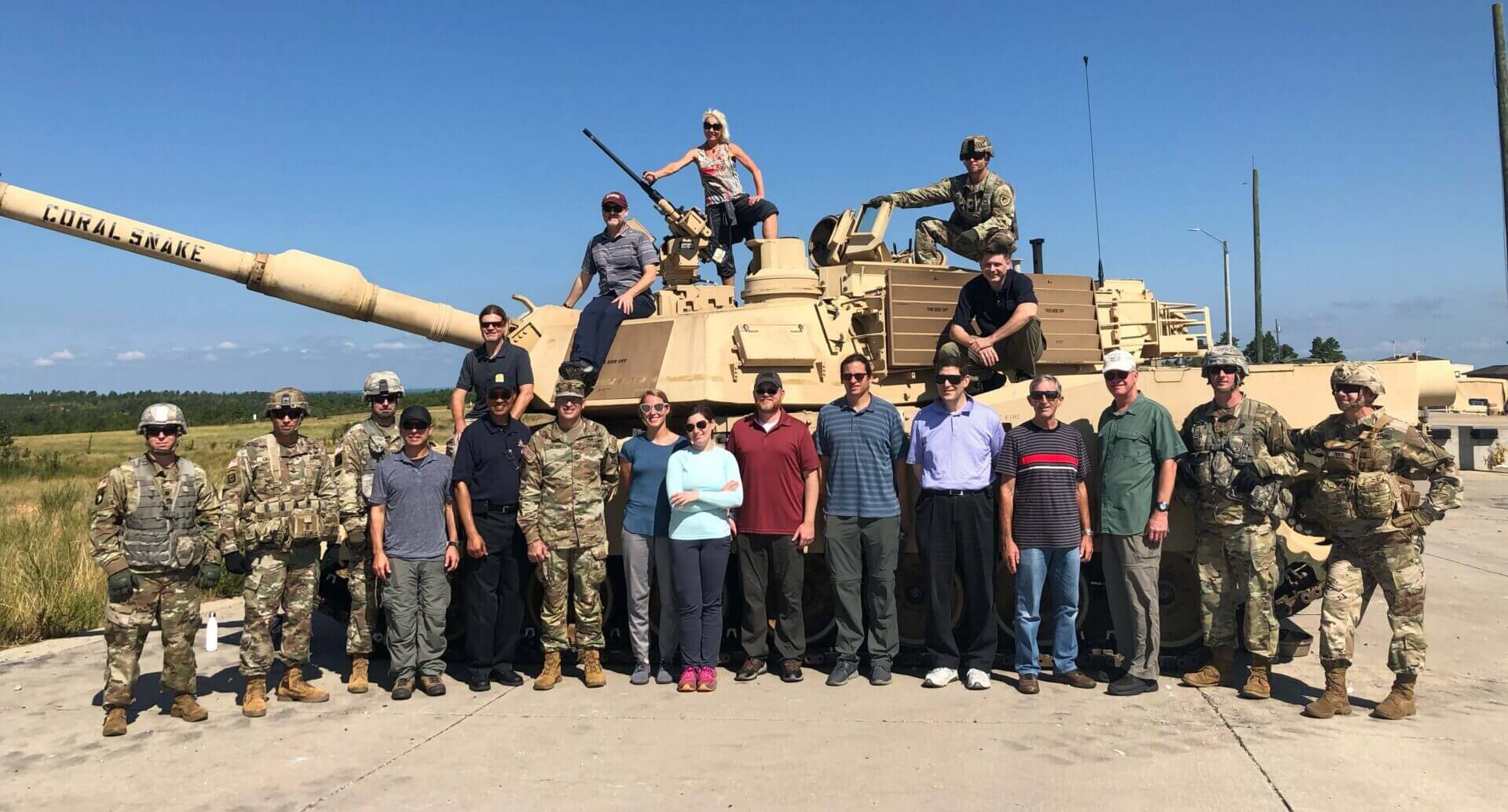 Her work was recognized among Top-10 Breakthrough Technologies by MIT’s Technology Review (2015). Greer was named as one of “100 Most Creative People” by Fast Company and a Young Global Leader by World Economic Forum (2014) and received multiple
career awards: Kavli (2014), Nano Letters, SES, and TMS (2013); NASA, ASME (2012), Popular Mechanics Breakthrough Award (2012), DOE (2011), DARPA (2009), and Technology Review’s TR-35, (2008). She is an active member of scientific community through professional societies (MRS, SES, TMS), having organized multiple symposia, been chosen as Conference Chair (MRS, 2021; GRC 2016), served on the Board of Directors for Society of Engineering Science (SES) and on government agency panels: DOE’s Basic Research Needs workshop (2020), National Materials and Manufacturing Board through National Academies (since 2020), and was selected to participate in DoD’s Bush Fellows Research Study Team, BFRST (2020) (see attached photo). Greer is also a concert pianist who performs solo recitals and in chamber groups, with notable performances of “Prejudice and Prodigy” with the Caltech Trio (2019), “Nanomechanics Rap” with MUSE/IQUE (2009), and as a soloist of Brahms Concerto No. 2 with Redwood Symphony (2006) and of Rachmaninoff’s 2nd piano concerto with the Caltech Orchestra (2025).
Wednesday, August 26, 2026
Reception at 2:30 PM
Seminar at 3:30 PM
Michelson Hall, Room 101 (MCB 101)
</h5 -->
host: Ronney
Reconstruction of Left Ventricular Pressure Using Cardiovascular Mechanics
Coskun Bilgi
Postdoctoral Researcher
Department of Aerospace & Mechanical Engineering
University of Southern California
Los Angeles, CA
Left ventricular (LV) pressure is a fundamental quantity that provides a direct window into the mechanics and energetic performance of the heart. However, LV pressure is typically measured through invasive cardiac catheterization, limiting its accessibility for routine and longitudinal assessment. This talk will present our efforts to reconstruct the LV pressure waveform noninvasively using a physics-based approach. The cardiac cycle consists of physiologically distinct phases. Rather than describing the entire pressure waveform using a single empirical function, our framework identifies key physiological time instances throughout the cardiac cycle and reconstructs the pressure between them using principles of fluid and solid mechanics. By coupling these phase-specific descriptions through physiological conditions, a continuous LV pressure waveform can be reconstructed and clinically important hemodynamic indices can be estimated without direct ventricular catheterization. We will discuss the development of this framework and its evaluation across both human and preclinical studies. In retrospective human data, reconstructed LV pressure and pressure-derived indices differentiated healthy individuals from patients with heart failure. In preclinical experiments with simultaneous invasive pressure measurements, the method accurately reproduced important hemodynamic metrics across varying cardiac conditions. Together, these studies demonstrate how combining cardiovascular physiology with fundamental mechanics represents a promising step toward the noninvasive diagnosis and monitoring of cardiovascular conditions.
Coskun Bilgi is a postdoctoral researcher in the Department of Aerospace and Mechanical Engineering at the University of Southern California. He earned his Ph.D. in Aerospace and Mechanical Engineering from USC under the supervision of Professor Niema Pahlevan and is continuing his postdoctoral research with him. Prior to USC, he received both his M.S. and B.S. degrees in Mechanical Engineering from Bogazici University. His research focuses on cardiovascular mechanics, with an emphasis on developing physics- and mechanics-based methods for noninvasive assessment of cardiac function and hemodynamics.
Wednesday, September 2, 2026
3:30 PM
Seaver Science Library, Room 202 (SSL 202)
From Surrogates to Solvers: Physics-Embedded Vision Transformers and Foundation Models in Mechanics
Benjamin A. Jasperson
Postdoctoral Scholar
Department of Aerospace & Mechanical Engineering
University of Southern California
Los Angeles, CA
Accurately predicting the behavior of advanced mechanical systems and materials requires capturing complex multiscale phenomena and rare events. While classical numerical methods offer high fidelity, their immense computational costs, especially when bridging disparate scales, often bottleneck the research and design cycle. Artificial intelligence provides a fast, compelling alternative, yet transitioning these tools from black-box data surrogates to rigorous, physics-aware solvers remains a critical challenge.
This talk explores the intersection of solid mechanics and interpretable AI, focusing on strategies to combine the guarantees of traditional solvers with the speed of deep learning. We will examine Vision Transformers (ViTs) as foundational architectures, specifically evaluating their accuracy, numerical stability, and overall performance when applied to continuum mechanics compared to classical methods.
Moving beyond standard surrogate modeling, we will tackle the unique computational challenge of predicting rare events, centered around understanding how unit mechanisms influence crack self-healing in metals. We will discuss how foundation models can map heterogeneous, multiscale materials data into a shared latent space, yielding frameworks that are highly descriptive and predictive of these highly localized phenomena. Finally, we will conclude with a broader vision for the future of AI-embedded computational mechanics.
Benjamin A. Jasperson is a Postdoctoral Scholar at the University of Southern California. His research sits at the intersection of computational mechanics, materials science, and artificial intelligence. Dr. Jasperson brings over a decade of industrial R&D experience to his academic work; he served as a Lead Mechanical Design Engineer on development projects ranging from high-yield neutron sources to medical devices. He holds a Ph.D. in Theoretical & Applied Mechanics from the University of Illinois Urbana-Champaign and is a licensed Professional Engineer.
Wednesday, September 2, 2026
3:30 PM
Seaver Science Library, Room 202 (SSL 202)
host: Xu
Homogenizing Origami and Kirigami Metamaterials
Paul Plucinsky
Assistant Professor
Aerospace & Mechanical Engineering Department
University of Southern California
Los Angeles
Shape-morphing finds widespread utility, from the deployment of small stents and large solar sails to actuation and propulsion in soft robots. Kirigami and origami metamaterials, formed by repeating patterns of slits, creases and panels, are a versatile platform for shape-morphing, inspiring the design of many morphing structures and devices. However, it remains a challenge to predict the response of these and other metamaterial systems to a broad range of loads and stimuli, especially under large deformations.
This talk describes general theoretical principles for homogenizing origami and kirigami metamaterials. Our broad goal is to derive, from first principles, an effective mechanical theory for their bulk deformations, valid in the limit of a large number of building blocks. The first part discusses kirigami; the second discusses origami. We present the foundational ingredients of the theory and give numerical demonstrations of its predictive power.
 Paul Plucinsky is an Assistant Professor in the USC Department of Aerospace and Mechanical
Engineering. His research interests lie at the interface of solid mechanics, materials science and
mathematic, where he applies a theory-guided approach to range of topics including the design
and modeling of origami and kirigami metamaterials. Prior to joining USC in 2020, Paul was a
Postdoctoral Scholar in Aerospace Engineering and Mechanics at the University of Minnesota. He
received his Ph.D. in Mechanical Engineering at Caltech in 2017, and a B.S. in Civil Engineering
and M.S. in Structural engineering at the University of Michigan in 2011. He received the NSF
CAREER Award in 2023.
Paul Plucinsky is an Assistant Professor in the USC Department of Aerospace and Mechanical
Engineering. His research interests lie at the interface of solid mechanics, materials science and
mathematic, where he applies a theory-guided approach to range of topics including the design
and modeling of origami and kirigami metamaterials. Prior to joining USC in 2020, Paul was a
Postdoctoral Scholar in Aerospace Engineering and Mechanics at the University of Minnesota. He
received his Ph.D. in Mechanical Engineering at Caltech in 2017, and a B.S. in Civil Engineering
and M.S. in Structural engineering at the University of Michigan in 2011. He received the NSF
CAREER Award in 2023.
Wednesday, September 9, 2026
3:30 PM
Seaver Science Library, Room 202 (SSL 202)
host: Xu
Engineering Human Health: Biomechanics, Medical Imaging, and Patient-Specific Modeling
Kaveh Laksari
Assistant Professor
Mechanical Engineering Department
University of California, Riverside
Riverside, CA
The human body is a complex mechanical system in which structure, material properties, and physiological function are intimately connected. Yet many of the mechanical processes underlying injury and disease cannot be measured directly in humans. Our laboratory develops engineering approaches that combine biomechanics, medical imaging, computational modeling, biomedical devices, and data-driven methods to uncover these hidden relationships and translate them into tools for understanding and improving human health. In this talk, I will highlight three areas of our research that span scales from tissue mechanics to patient-specific physiology. First, I will discuss our work in traumatic brain injury, where wearable sensors, neuroimaging, and computational models are used to connect head impact biomechanics with changes in brain structure and function. Second, I will describe approaches for characterizing the mechanical behavior of biological materials, including inverse methods that combine experiments and computational mechanics to determine material properties that are difficult to measure directly. Finally, I will present our work in cerebrovascular biomechanics and stroke, where large-scale vascular imaging, automated vessel reconstruction, computational hemodynamics, and machine learning are being integrated to characterize patient-specific cerebrovascular anatomy and function and ultimately improve stroke assessment and outcome prediction.
Together, these studies illustrate a broader research vision: using engineering to infer physiological information that cannot be directly observed, and integrating experiments, imaging, mechanics, and computation toward predictive, patient-specific models of human health.
 Kaveh Laksari, Ph.D., is an Associate Professor of Mechanical Engineering at the University of California, Riverside. His research lies at the intersection of biomechanics, medical imaging, computational modeling, and biomedical engineering, with an emphasis on understanding the mechanical mechanisms underlying neurological injury and cerebrovascular disease. His laboratory develops experimental and computational approaches for traumatic brain injury, cerebrovascular biomechanics and stroke, biological material characterization, and patient-specific modeling. Prior to joining UC Riverside, Dr. Laksari was an Assistant Professor at the University of Arizona and a postdoctoral researcher in Bioengineering at Stanford University. He received his PhD in Mechanical Engineering from Temple University. His research has been supported by the National Institutes of Health, National Science Foundation, and American Heart Association.
Wednesday, September 16, 2026
3:30 PM
Seaver Science Library, Room 202 (SSL 202)
host: Pahlevan
Advanced Manufacturing of Stretchable Electronics for Soft Biological and Robotic Systems
Hangbo Zhao
Assistant Professor
Department of Aerospace and Mechanical Engineering
University of Southern California
Los Angeles, CA
Electronics that stretch and conform open new possibilities for interfacing with soft biological and robotic systems, but they cannot be built with the planar, rigid-substrate processes that modern microfabrication was designed around. My group develops manufacturing methods that close this gap, and I will organize the talk around two routes we have pursued. The first reshapes conventional high-performance materials into stretchable form, using micromachining, transfer printing, and mechanically guided assembly to build microneedle electrode arrays for electromyography and origami-inspired strain sensors for soft robot shape perception. The second patterns intrinsically stretchable materials at microscale resolution, where colloidal self-assembly of liquid metal particles and microtransfer printing produce high-resolution electronics that we used for in vivo cardiac mapping.
 Hangbo Zhao is an Assistant Professor and Philip and Cayley MacDonald Early Career Chair in the Department of Aerospace and Mechanical Engineering and the Alfred E. Mann Department of Biomedical Engineering at the University of Southern California. His research group develops advanced manufacturing methods for soft and stretchable electronics, with applications in biomedical devices and soft robotics. Prior to joining USC in 2020, he was a postdoctoral researcher at Northwestern University. He received his M.S. and Ph.D. degrees in Mechanical Engineering from MIT. Dr. Zhao has received several honors, including the NSF CAREER Award, ONR Young Investigator Award, NIH Trailblazer Award, Society of Manufacturing Engineers Outstanding Young Manufacturing Engineer Award, and USC Viterbi Junior Research Award.
Wednesday, September 23, 2026
3:30 PM
Seaver Science Library, Room 202 (SSL 202)
host: Xu
The Fluid Mechanics of Stroke: unraveling the role of flow and transport in complex cerebrovascular networks
Debanjan Mukherjee
Assistant Professor of Mechanical Engineering
Paul M. Rady Department of Mechanical Engineering
University of Colorado
Boulder, Colorado
Despite many recent medical advances, stroke continues to be a leading global cause of death and disability. The latest American Heart Association statistics reveal that, on average, someone in the United States dies of a stroke every 3 minutes and 14 seconds. As a disease that stems from flow disruption in the brain due to blockage or rupture of an artery in the brain, fluid mechanics plays an intimate role in stroke etiology and treatment. Yet, owing to the inherent complexity of blood flow through complex cerebrovascular network, and associated cerebrovascular physiology, our understanding of the role of fluid mechanics in stroke remains incomplete at best. Here, I will outline a combination of computer simulations, benchtop experiments, and medical image analytics to address this knowledge gap. I will illustrate how we have leveraged this hybrid approach to study mechanisms of ischemic stroke due to embolisms, understand the role of collateral circulation in the brain, and illustrate network level non-linear flow effects that mediate transport of drug such as tissue Plasminogen Activator (tPA) for stroke treatment. Through these examples, we will present a framework for data-integrated digital twins for stroke, and discuss some of the associated challenges and opportunities in developing and translating such digital twins for advancing stroke care.
 Debanjan Mukherjee is an Assistant Professor of Mechanical Engineering at the University of Colorado Boulder. He is also a program faculty for the Biomedical Engineering program, and a faculty council member at the BioFrontiers Institute at CU Boulder. He leads an inter-disciplinary flow physics and biofluids research group named FLOWLab. Prof. Mukherjee completed his undergraduate studies at IIT Madras in India, and subsequently his doctoral and post-doctoral training at the University of California, Berkeley. He has received several awards in recognition of his work: including the National Institutes of Health Maximizing Investigators’ Research Award (MIRA); the National Institutes of Health Trailblazer Award; the ORAU Ralph E. Powe Junior Faculty Enhancement Award; the American Heart Association post-doctoral fellowship award; and has been selected as a Research and Innovation Office Faculty Fellow and a Dean’s Excellence Fellow in Generative AI at the University of Colorado Boulder.
Wednesday, September 30, 2026
3:30 PM
Seaver Science Library, Room 202 (SSL 202)
host: Garikipati
What Cameras Can and Cannot See in a Flame: Physics-Constrained Reconstruction of Combustion Fields from High-Speed Video
Benjamin Cohen
Ph.D. Student
Department of Aerospace & Mechanical Engineering
USC
Los Angeles, CA
Visual measurements offer only a partial projection of the physical world. What we can recover depends on both how well we quantify the measurement process and what we know about the system's physics. Physical laws can constrain fields that measurements alone cannot determine. This talk applies that idea to premixed combustion imaging. The study focuses on a lean hydrogen flame propagating through a 6 mm gap between parallel plates, a Hele-Shaw cell used in Prof. Paul Ronney's Combustion Physics Lab at USC to study confined flame propagation. The narrow gap shortens the optical path, simplifying the link between the flame's local thermochemical state and the measured light. Three synchronized high-speed cameras record the flame. High-speed cameras capture only light integrated along a line of sight. Since temperature, species concentrations, velocity, and pressure are not measured, models of light emission, optical projection, and reacting-flow dynamics must be used to infer them. As a result, this is an ill-posed inverse problem. The seminar examines what is required to set up and solve this inverse problem, and what uncertainty remains in the resulting reconstruction of the physical flame.
Benjamin Cohen is a Ph.D. student in Mechanical Engineering at the University of Southern California, where he works in Prof. Paul Ronney's Combustion Physics Lab. His research uses high-speed imaging of quasi-two-dimensional flames in Hele-Shaw cells, together with computer vision and physics-informed machine learning, to reconstruct combustion fields from video. Before his doctoral work, he studied graph neural networks and convex optimization as a USC SURF fellow. He enjoys pure mathematics and is a two-time Putnam Competition finalist. More at www.benjaminlcohen.net.
Designing Heterogeneity in Structural Metals: Processing and Deformation Mechanisms
GangHee Gu
Postdoctoral Scholar
Department of Aerospace & Mechanical Engineering
USC
Los Angeles, CA
Microstructural heterogeneity offers a route to improving the strength–ductility balance in structural metals. This seminar connects processing, deformation mechanisms, and optimization through experiments and modeling. Cold rolling, local laser treatment, and high-pressure torsion with annealing establish gradient and layered architectures. Plasma nitriding extends this concept to the nanoscale, combining surface strengthening with recovery-assisted ductility. Finally, dislocation-based modeling and finite element analyses assess additional hetero-deformation-induced (HDI) contributions and examine how domain size and volume fraction influence deformation localization. The results highlight the benefits of fine soft domains within a hard matrix in the investigated microstructures, illustrating how understanding deformation mechanisms can guide the optimization of heterostructured metals.
GangHee Gu is a Postdoctoral Scholar in the Department of Aerospace and Mechanical Engineering at the University of Southern California. He received his Ph.D. in Materials Science and Engineering from Pohang University of Science and Technology (POSTECH), South Korea, in 2025. His research focuses on the mechanical properties, deformation behavior, and microstructural characterization of wrought and additively manufactured high-entropy alloys and steels.
Wednesday, October 7, 2026
3:30 PM
Seaver Science Library, Room 202 (SSL 202)
host: Xu
The Multivariate Cauchy Estimator
Jason L. Speyer
Distinguished Professor,
Ronald and Valerie Sugar Endowed Professor of Engineering
Mechanical and Aerospace Engineering Department
UCLA
Los Angeles, CA
The multivariate Cauchy estimator (MCE) provides an exact Bayesian filtering framework for discrete-time linear dynamic systems subject to additive Cauchy process and measurement noise, a direct analog to the Gaussian-based Kalman filter. For an n-dimensional system (n>1), applying Bayes’ rule directly in the state domain fails to yield a recursive, closed-form conditional probability density function (cpdf). However, propagating the cpdf’s characteristic function (the Fourier transform of the cpdf) produces the same analytic function through measurement updates and dynamic propagations, establishing the MCE as the only estimator derived in the characteristic function spectral domain and, alongside the Kalman filter, the only known filter with exact recursive analytic properties. Because heavy-tailed Cauchy distributions process measurement updates through nonlinear operations, the MCE can model asymmetric and multimodal state distributions that are impossible under the linear-Gaussian framework. The development of computationally efficient numerical methodologies now enables real-time application of this theory to complex engineering systems. When compared against the Extended Kalman Filter (EKF), numerical evaluations of the Extended MCE (EMCE) demonstrate superior performance and robustness in handling system parameter uncertainty within Gaussian simulations, suppressing severe impulsive radar noise in missile tracking, and estimating the position, velocity, and atmospheric density of Very Low Earth Orbit (VLEO) satellites operating in impulsive atmospheric environments.
 Jason L. Speyer received the B.S. in aeronautics and astronautics from MIT, Cambridge and the Ph.D. in applied mathematics from Harvard University, Cambridge, MA. He was awarded an Honorary Doctorate from the Technion in 2013. He is the Ronald and Valerie Sugar Distinguished Professor in the Mechanical and Aerospace Engineering Department and the Electrical and Computer Engineering Department, UCLA. He coauthored, with W. H. Chung, Stochastic Processes, Estimation, and Control (SIAM, 2008), and coauthored, with D. H. Jacobson, Primer on Optimal Control Theory (SIAM, 2010). He served as Associate Editor for Technical Notes and Correspondence (1975–1976) and Stochastic Control (1978–1979), IEEE Transactions on Automatic Control, for AIAA Journal of Guidance and Control (1977–1978), and for Journal of Optimization Theory and Applications (1981-present). He is a fellow of the IEEE, an Honorary fellow of the AIAA, and was awarded the AIAA Mechanics and Control of Flight Award, AIAA Dryden Lectureship in Research, Air Force Exceptional Civilian Decoration (1991 and 2001), IEEE Third Millennium Medal, AIAA Guidance, Navigation, and Control Award, Richard E. Bellman Control Heritage Award, and membership in the National Academy of Engineering.
Wednesday, October 14, 2026
3:30 PM
Seaver Science Library, Room 202 (SSL 202)
hosts: Ronney/Madni
Dynamics of Droplet Impact from Engineering to Environmental Systems
Abhishek Saha
Associate Professor
Department of Mechanical and Aerospace Engineering
University of California San Diego
La Jolla, CA
Droplet impact is ubiquitous in natural and engineering processes. From raindrops falling onto the ocean to applications such as additive manufacturing, inkjet printing, and spray coating, droplet impact plays a critical role in mass, energy, and species transport. In this talk, we will discuss two classes of droplet impact problems.
In the first part, we will explore substrate oscillation as a strategy for controlling droplet spreading on solid surfaces. We will examine how spreading depends on oscillation frequency, amplitude, and phase, and develop scaling analyses to guide design optimization. We will then highlight the striking changes in impact dynamics as substrate oscillation shifts from low to high frequencies and discuss the mechanisms governing the high-frequency response.
In the second part, we will focus on raindrop impact on ocean waves. The resulting atomization and mixing influence air–sea exchange, with implications for marine life, climate, and coastal environments. Although field campaigns have provided limited measurements of the collective and stochastic effects, our understanding of individual droplet–wave interactions remains limited. We will present laboratory experiments using a new benchtop wave tank to examine these interactions in detail. Specifically, we will explore how waves influence cavity formation and jetting following droplet impact, and how wave conditions modulate jet breakup and secondary droplet formation.
 Abhishek Saha is an Associate Professor in the Department of Mechanical and Aerospace Engineering at the University of California San Diego. His research group studies multiphase systems and reactive flows, with applications in propulsion, power generation, manufacturing, environmental processes, and disease transmission. Before joining UC San Diego in 2018, he was a research staff member at Princeton University. He earned his Ph.D. at the University of Central Florida, where he received the university-wide Outstanding Dissertation Award. He received the NSF Faculty Early Career Development (CAREER) Award in 2022 and the ASME Rising Star in Mechanical Engineering Award in 2024. He is an elected Associate Fellow of AIAA.
Wednesday, October 21, 2026
3:30 PM
Seaver Science Library, Room 202 (SSL 202)
host: Xu
host: Zhao
host: Bermejo-Moreno
host: Xu
host: Sadhal